Winching & Recovery
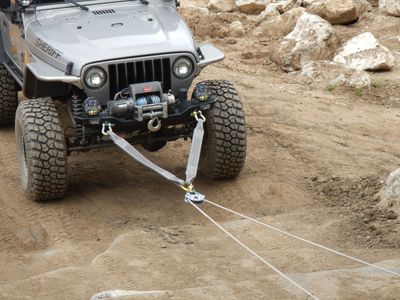
1-Day Winching & Off-Road Vehicle Recovery Course
Learn to Get Unstuck — Safely.
Getting stuck is part of off-road travel. Getting someone hurt during the recovery doesn't have to be. The Driving Company's 1-Day Winching & Off-Road Vehicle Recovery Course provides hands-on training in the safe and effective use of winches, kinetic recovery ropes, rigging, recovery points, shackles, mechanical advantage, anchors, and other common 4x4 recovery equipment.
And you'll be learning from the professionals who train search and rescue personnel, park rangers, firefighters, law enforcement, military personnel, and other professional off-road operators.
Recovery operations can generate tremendous forces. Using the wrong equipment, selecting an inappropriate recovery point, standing in the wrong place, incorrectly rigging a winch, or attempting a kinetic recovery without understanding the forces involved can result in serious injury, vehicle damage, or equipment failure. Don't learn vehicle recovery by trial and error. Learn it hands-on in a controlled environment with professional instructors.
No Winch? No Recovery Gear? That's Fine.
You do not need to own a winch or any recovery equipment to attend this course.
We provide the winches, ropes, shackles, rigging equipment, recovery accessories, and other gear you'll use during training. In fact, if you don't already own recovery equipment, we recommend that you wait until after the course before buying anything. You'll have the opportunity to use different types of equipment, understand their advantages and limitations, learn how recovery equipment is rated, and determine what makes sense for your vehicle and the type of off-road travel you actually do.
If you already own recovery gear, bring it. We'll help you understand how to inspect it, determine whether it is appropriately rated, and use it safely and effectively.
By the end of the course, you'll have a much better understanding of what belongs in your recovery kit and what you probably don't need.
Use our gear. Learn what works. Then build your own kit.
Independent Equipment Recommendations — No Sponsorships
The Driving Company has relationships with several reputable recovery-equipment manufacturers and suppliers, and those relationships may allow our students to receive discounts on recovery equipment after completing the course. We have even beta tested gear for some of these companies.
But there is an important distinction:
The Driving Company does not accept equipment sponsorships.
We have intentionally declined sponsorship offers because we want our students to know that when we recommend a winch, rope, shackle, recovery point, or other piece of equipment, we recommend it because we believe it performs well — not because a company is paying us to promote it. Our equipment recommendations are based on our instructors' professional experience, equipment performance, appropriate ratings, and how the gear fits the student's actual needs.
If a manufacturer makes good equipment, we'll tell you. If we don't think you need a particular piece of equipment, we'll tell you that too. Any student discounts are simply a benefit of the relationships we've developed with equipment companies. They do not influence what we teach or what we recommend.
No Winch on Your Vehicle? You Still Need Recovery Skills.
You don't need to own a winch to play an important role in an off-road recovery.
When you're overlanding or traveling off road with other vehicles, someone else in the group may have the winch or recovery equipment, but they may need your help to safely complete the recovery. A knowledgeable team member can help evaluate the situation, identify hazards, establish a safe working area, select recovery points, handle equipment, assist with rigging, communicate with drivers, monitor the recovery, and recognize when something isn't right. An untrained person trying to help can unintentionally make a dangerous situation considerably worse.
Even if you never install a winch on your own vehicle, understanding recovery makes you a more capable and valuable member of any off-road group.
Recovery Is About Problem-Solving, Not Just Equipment
Knowing how to push the button on a winch controller isn't recovery training. Every stuck vehicle presents a different problem. Where is the vehicle stuck? How much resistance must be overcome? What direction should it move? Is there an appropriate anchor? Are the available recovery points suitable? How much force will be placed on the equipment and anchor? Can the load be reduced? Does the direction of pull need to change?
Students learn to evaluate the entire recovery before connecting equipment.
You'll learn the principles behind mechanical advantage, multi-line pulls, direction changes, required pull force, anchor force, equipment ratings, and safe rigging so you can begin making informed recovery decisions rather than simply attaching equipment and hoping physics feels cooperative.
Winch Operation & Rigging
Students receive hands-on instruction in safe winch operation and commonly used winching techniques.
Training includes:
- Safe winch operation
- Winch controls and operation
- Winching accessories
- Recovery points
- Equipment inspection and ratings
- Rigging techniques
- Teamwork during winching operations
- Driver and recovery-team communication
- Self-recovery
- Single-line pulls
- Multi-line pulls
- Direction changes
- Mechanical advantage
- Calculating required pull force
- Calculating anchor force
- Anchor selection
- Land-anchor concepts
- Establishing safe working areas during recovery operations
Recovery Equipment — What You Actually Need
Walk through an off-road store or start shopping online and you'll discover an impressive number of ways to spend money on recovery equipment. We'll help you understand what the equipment does and how to determine whether it is appropriate for your vehicle.
Equipment covered may include:
- Winches
- Kinetic Energy Recovery Ropes (KERR)
- Recovery straps
- Winch extension lines
- Snatch blocks and recovery rings
- Rated hard shackles
- Soft shackles
- Tree straps
- Chains and appropriate applications
- Recovery dampers
- Land anchors
- Rated vehicle recovery points
- Common winching and rigging accessories
Most importantly, you'll learn to look beyond advertising claims and understand working loads, equipment ratings, compatibility, and the forces the equipment may experience during an actual recovery.
Kinetic Rope & Dynamic Vehicle Recovery
Kinetic recovery can be extremely effective when performed correctly. It can also introduce substantial forces into both vehicles, their recovery points, and the recovery equipment. Students learn how kinetic recovery differs from winching and static recovery, when it may be appropriate, how to select and connect equipment, how drivers communicate, and how to conduct a dynamic recovery safely.
The course includes hands-on participation in an actual dynamic vehicle recovery under instructor supervision.
You'll learn:
- Kinetic recovery principles
- Appropriate equipment selection
- Vehicle recovery-point considerations
- Proper setup
- Driver-to-driver communication
- Establishing the recovery area
- Safe positioning of participants
- Managing the recovery
- Recognizing when kinetic recovery is not the appropriate solution
The Final Challenge — Put It All Together
At the end of the course, we're going to give you a problem. Students will be presented with a realistic off-road vehicle recovery scenario without simply being told which equipment to use or how to solve it. Your team will need to assess the situation, identify hazards, develop a recovery plan, determine the required direction of pull, calculate the forces involved, select appropriate equipment, establish safety procedures, rig the recovery, communicate the plan, and execute it. Our instructors will be there to guide you and keep the exercise safe. But you'll solve the problem. Because when a vehicle gets stuck in the backcountry, there usually isn't an instructor standing beside you holding the answer.
Why Train With The Driving Company?
The same instructors teaching you recreational off-road recovery skills also train search and rescue personnel, firefighters, park personnel, law enforcement officers, military personnel, and other professional emergency responders. Our instructors understand recovery not simply as a recreational off-road activity, but as a risk-management and problem-solving operation involving vehicles, equipment, people, and significant physical forces.
The Driving Company's entire instructor team is certified by the State of California in off-road EVOC instruction, and we've been professionally training off-road drivers since 2003.
When things go wrong off road, people call the professionals. We train those professionals. Now that same professional-level approach to winching and off-road vehicle recovery training is available to civilian 4x4 drivers and overlanders.
Who Should Attend?
This course is appropriate for:
- Overlanders
- Recreational 4x4 drivers
- Jeep, pickup, SUV, and EV 4x4 owners
- Drivers who already own a winch but aren't confident using it
- Drivers considering buying a winch or recovery equipment
- People who regularly travel off road with groups
- Drivers who want to build an appropriate recovery kit
- Anyone who wants to understand how to safely assist during another vehicle's recovery
No previous recovery experience is required.
Custom Winching & Off-Road Recovery Training
Have a group that wants to train together?
We can schedule a custom Winching & Off-Road Vehicle Recovery Course for groups of eight or more.
Custom recovery training can also be conducted at other suitable locations. Contact The Driving Company to discuss your group, location, vehicles, and training needs.
Learn the equipment. Understand the forces. Practice the techniques. Then build a recovery kit based on knowledge instead of advertising.